Start with your masteries
Choose the character you want to play before buying a weapon or spending skill points. Chinese masteries include Bicheon, Heuksal and Pacheon alongside Force, Cold, Lightning and Fire. European masteries include Warrior, Wizard, Rogue, Warlock, Bard and Cleric. They are different skill groups, not interchangeable names for the same character.
Open the mastery planner and select Chinese or European. Pick the mastery you are considering, then read the available skill ranks. Compare the required mastery level and the skill-point cost rather than choosing by the icon alone. A later rank can depend on an earlier skill, so the total plan includes its prerequisites.
For a returning character, enter the ranks you already know before setting the ranks you want. The useful number is the additional SP needed from your current state, not the lifetime SP total. Chinese and European drafts are kept separately so comparing the two does not replace the other plan.
Check the weapon before you buy
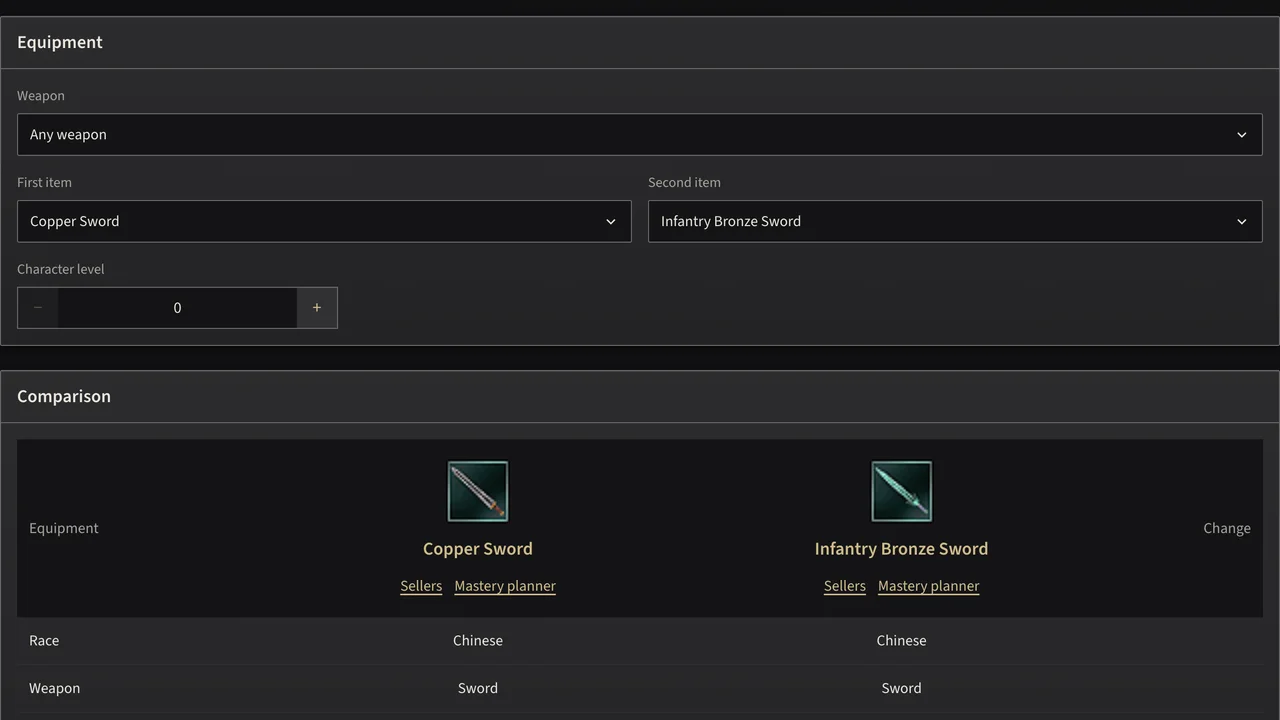
Equipment has its own race and level requirements. A weapon that looks similar can belong to another civilization or a different weapon family. Start with the item page, then compare the candidate with your current equipment in the equipment comparison.
Copper Sword and Infantry Bronze Sword are a useful first comparison. Their pages show the required level, degree and purchase cost together. The table below uses the same values as those pages; it does not turn a higher price into a claim that the weapon suits every build.
| Item | Level | Purchase cost |
|---|---|---|
 Copper Sword Copper Sword | 1 | 890 gold |
 Infantry Bronze Sword Infantry Bronze Sword | 8 | 3,500 gold |
Turn the choice into a shopping plan
Blacksmith Chulsan stocks both swords. Open the shopping plan, add the item and set the quantity you need. Several items from the same merchant can be grouped together instead of making a separate trip for each purchase.
A missing seller is not proof that an item cannot be obtained. It can mean that the item comes from a quest, another acquisition method or a merchant not listed for that item. Read its linked sources before planning the trip. Purchase costs also do not predict a player-market offer.
Choose your next objective
Use the hunting finder to compare enemies in a level range you can handle. Read the enemy page and any associated quests before traveling. Level and HP help distinguish targets, but neither number alone guarantees that your character can defeat an enemy.
Add unfinished quests to the quest planner. Shared enemies let you spot objectives that can be worked on together, while the experience planner shows how much experience remains to your target level. Only enter an hourly rate you have actually observed with your character; equipment, party and server conditions can change it.
Finally, choose your departure and destination in the teleport itinerary. The itinerary follows gate connections in their allowed direction, showing the listed fee for each teleport and the sum of known fees. It does not estimate walking time or the danger of the route.